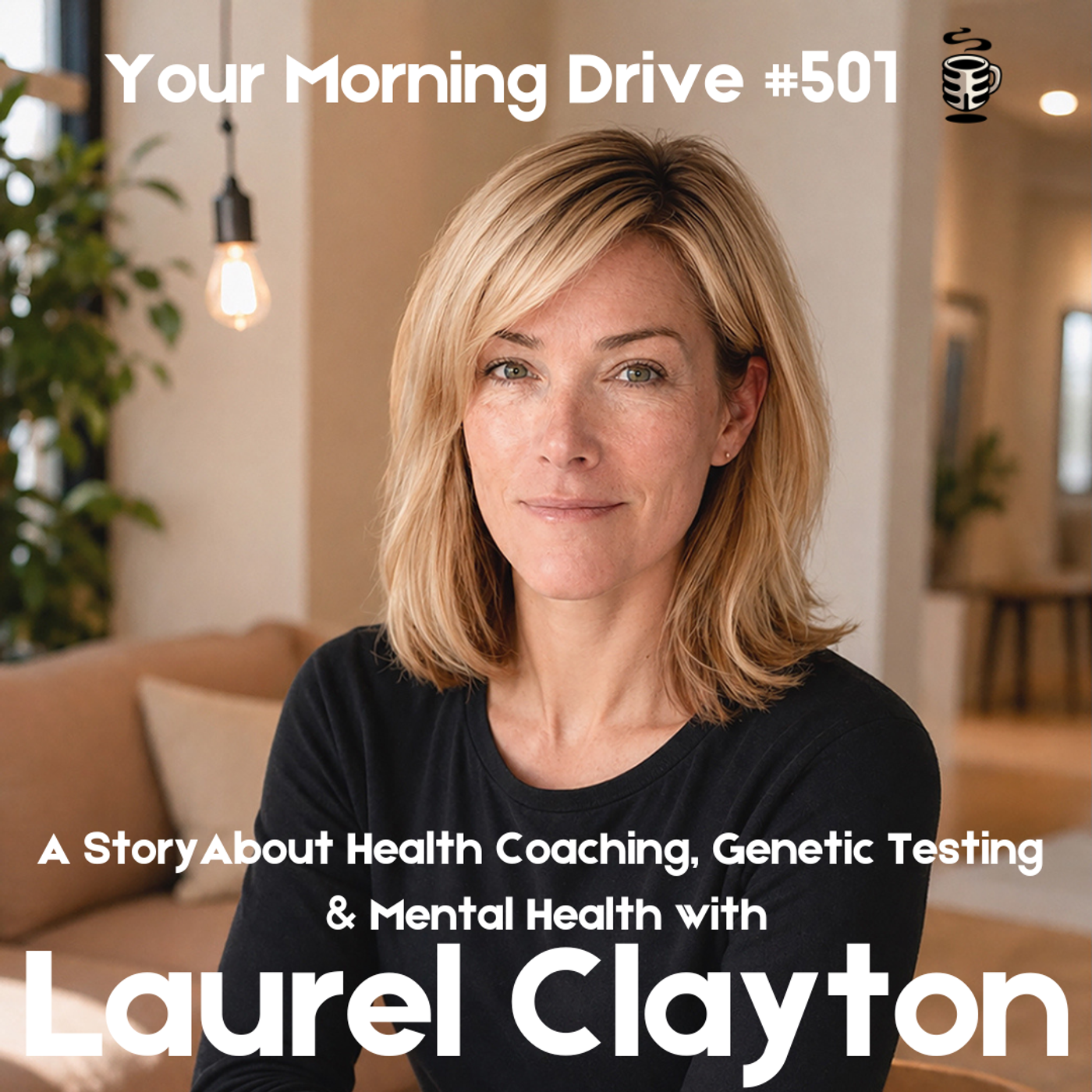
Laurel Clayton-Seheult spent more than sixteen years building a career in marketing before her own body forced a complete career pivot, and by the time she sat down with host Logan Lewis, she'd turned that detour into a mission. After running eighteen branches as a senior marketing director for the YMCA, an ulcerative colitis diagnosis sent Laurel back to school for precision nutrition and a master's in coaching. Today she works as a 3x4 genetic practitioner at East Cobb Counseling, helping clients swap guesswork for actual data about how their own bodies are wired. This conversation covers all of it — her Virginia childhood, the diagnosis that changed everything, why she refuses to coach anyone who hasn't taken a genetic test, and why she thinks ChatGPT is a great tool but a terrible doctor.
From Yorktown Boats to Eighteen YMCA Branches
Laurel grew up on the water in Yorktown, Virginia, with what she calls "a very, very long leash with a very tight noose" — freedom to roam as long as she was home on time. She was the only girl on a boys' soccer team growing up, which she says taught her early how to prove herself and take a little teasing along the way. After graduating from the University of Alabama with a degree in marketing, she built a career as senior marketing director for the YMCA, overseeing eighteen branches around metro Atlanta. She loved the work and the team around her — but the Atlanta commute, the long hours and the constant push to perform were quietly wearing her down in ways she didn't clock until much later.
The Diagnosis That Sent Her Back to School
About ten years ago, Laurel was diagnosed with ulcerative colitis, an autoimmune condition that causes an ulcer in the colon that won't heal. "It goes way beyond the scope of, my gosh, I can't go anywhere," she told Logan. "It's as much of a mental thing as it is a physical thing." She was put on the biologic drug Humira, which she credits with saving her life, but the standard advice — take the injection, nutrition plays no role — never sat right with her. "I couldn't get over the why," she said. That question sent her back to school through precision nutrition coursework and a master's in coaching, and eventually to 3x4 genetic testing, which she calls a game changer. Looking back, she can now trace the exact habits — skipping meals to survive Atlanta traffic, running on empty while trying to "be on" in marketing meetings — that she believes contributed to her own diagnosis. Her ulcer is now in remission and the scar tissue is healing, something she says most patients never get to experience.
Why She Won't Coach Anyone Without a Genetic Test First
The 3x4 genetic test Laurel administers looks at roughly 170 genes and produces a thirty-page report, which she condenses into a three-page action plan. "I don't coach anyone at this point unless they do the test," she said, "because it's that impactful." She described a client who came in unfocused and low-energy — not someone who looked pre-diabetic, but whose genetics showed real trouble regulating glucose and insulin. The fix was simple: protein and fiber every three hours, never a carb alone. Within twenty-four hours he emailed her: "Holy sh*t, I didn't know how much of a difference I could feel by just doing that." That's the model Laurel keeps coming back to — before-and-after bloodwork, cholesterol and A1C numbers that either move or they don't. "That's where the rubber hits the road," she said. "You do the thing, the cholesterol comes down. You do the thing, the anxiety comes down."
The Trouble With Calling Yourself a "Coach"
Logan pushed Laurel on a question that clearly resonated with her: what does she think about a world where anyone with a phone can call themselves a coach with no real credentials behind it? Her answer had two parts. First, do the research — credentials matter, and not every person with letters after their name is a good fit for every client. Second, and just as important, is rapport. "If I don't gel with you, then I can't coach with you," she said. "That person is going to be your ride or die to help you get where you need to be." Working inside a mental health facility alongside licensed clinicians, Laurel is careful to draw her own lane clearly: she's not a counselor and not a medical doctor, but a genetic practitioner and coach whose job is to translate a dense scientific report into habits a real person can actually sustain.
AI Can't Read Your DNA — and Other Lessons in Data vs. Guesswork
The conversation took a sharp turn into AI, with Logan asking how Laurel's field competes with clients who'd rather screenshot their Aura Ring or Apple Watch data and ask ChatGPT what it means. Her answer leaned on a car analogy: "You show a picture to AI and they're like, that's a car, it's a beautiful car. But does it necessarily know if the car needs electricity, premium gas or diesel? Not until you look under the hood." She shared a striking example — a client on Seed probiotics, a supplement Laurel calls generally excellent, who had unusually high histamine markers. The fermented probiotic disrupted his gut flora so badly he thought he was having a psychotic break. Once they pulled the probiotic and adjusted his diet, he went from psychosis to, in his words, "holy sh*t, thank you" within a week — a shift no chatbot screenshot would have caught. That thread pulled straight into the episode's deeper theme: the gut-brain connection. "The gut is the second brain," Laurel said, explaining how her genetic reports flag a mood-and-behavior pathway tied directly to methylation and brain chemistry. She's seen kids on the cusp of needing SSRIs stabilize simply by eating enough protein and cutting histamine-triggering foods, and clients battling anxiety improve dramatically just by fixing blood sugar swings and adding basics like magnesium glycinate before bed. "Your gut produces all of your dopamine," she said. "Sometimes your gut will feel something before your mind even knows what it's experiencing."
Listen to the Full Conversation
From boys' soccer teams in Yorktown to psychotic-break-causing probiotics, this episode covers a lot of ground — and that's before Laurel and Logan get into her lightning round answers (Forrest Gump, Interview with the Vampire and Weird Science as her all-time favorite movies; Taylor Swift, Duran Duran and Tina Turner headlining her dream music festival; and a standing challenge from Laurel for Logan to finally try a twenty-four-hour phone detox). Hear the entire conversation between Logan Lewis and Laurel Clayton on Your Morning Drive, available now on Apple Podcasts, Spotify and YouTube.
Listen to Episode #501
Catch the full conversation with Laurel Clayton on Your Morning Drive, wherever you listen.